Our story
Bridging the gap between the clinic and the home.
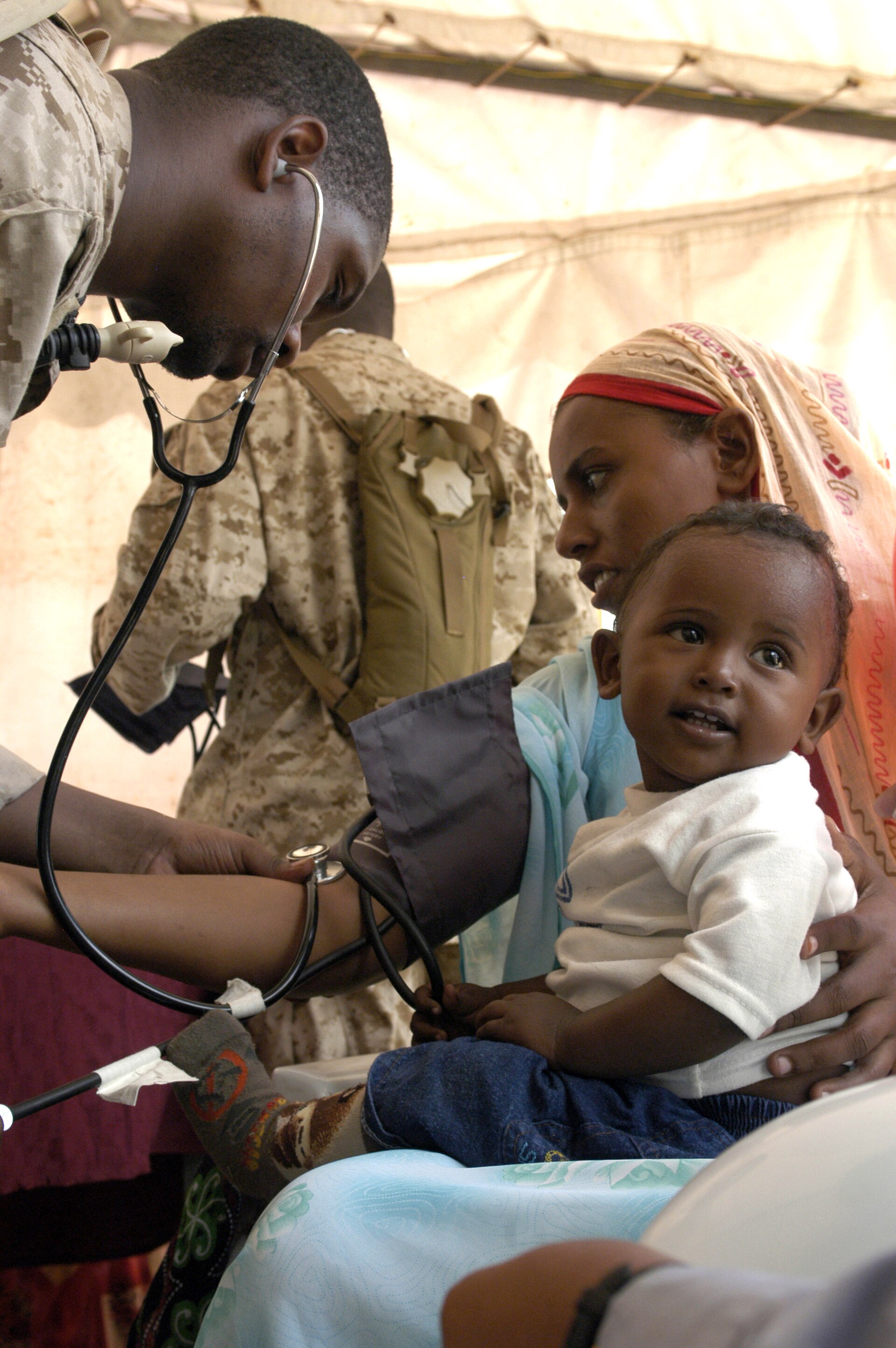
A blood pressure check during a community medical visit in Barigoni, Kenya. Photo by Jeremy L. Grisham, United States Navy. Public domain.
Our story started in the outpatient department in Makueni County, where I spent the better part of my clinical work. Day after day, elderly patients arrived from remote villages, and almost without exception, the blood pressure cuff told the same story. High. Sometimes critically so. Numbers that should have been caught weeks earlier, on a quiet morning at home, instead announced themselves in our consulting room when they were already close to an emergency.
Watching that pattern repeat, I had to ask: could we reach these patients before the numbers become emergencies?
So I went looking for answers. I carried out multiple interviews and consultations. The picture that emerged was consistent and sobering. The fatalities we were witnessing were rarely about the disease itself. They were about everything that happens in the gap between one clinic visit and the next.
No continuing care
Once a patient left the clinic, silence. Nobody tracked whether the treatment was working.
Apps too complex
Existing health apps demanded smartphones and digital skills our patients simply didn't have.
Data & fare
Data bundles and hospital fare were costs too high for families already stretched thin.
That discovery became CareBridge, a solution built around these exact needs. No smartphone, no app to learn, no data bundles. Just the simple phone every patient already carries, and an SMS conversation that keeps the clinic and the patient connected between visits.
We are a nonprofit because this problem is too important to place behind a subscription. If you believe rural Kenyans deserve the same standard of continuing care as anyone in Nairobi or New York, stand with us.